A New Moon a Day Late September 2026
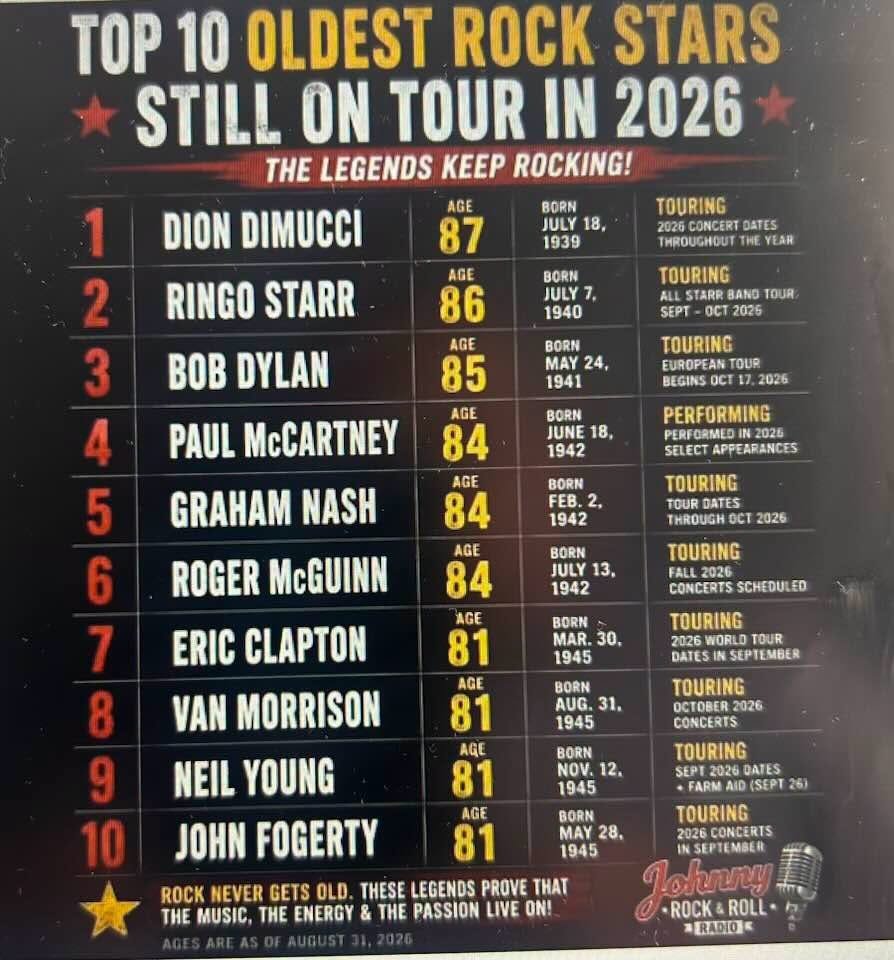
At a certain stage of life, you begin to look around at your contemporaries. You see a chart like this and you say to yourself, “Self, there’s a testament to the value of clean living!” Right? Well, how else to ‘splain it? The thing is, we know some of these folks, have seen them in concert, yes, but seen them rocking off stage too to something other than music. Many things other than, in fact, and not all of them necessarily healthy by any means. So what can we make of the longevity they’ve accomplished?
Good genes, of course, might be something they have in common. Then, too, we would offer, there’s creativity, that drive to say it, play it, to make something from nothing, to have that experience every artist in one way or another pursues simply because it gets them off like nothing else. When it happens, it’s sublime. Once it happens, you want more. And no matter how often it happens, it’s never enough. These guys like the money, sure, but it’s performing that’s their passion.
Why Mick and Keith and Ronnie didn’t make this list we can’t imagine because they as much as any personify both sides of this equation, the maybe not so clean living and the lifetime of making great music just because there’s nothing they’d rather do. The Who sang Hope I Die Before I Get Old and of course so many did, including their own rhythm section, maybe the best in the business. But Dan and the Juniors before them sang Rock and Roll Will Never Die. Creativity is a powerful life force. These guys got it.
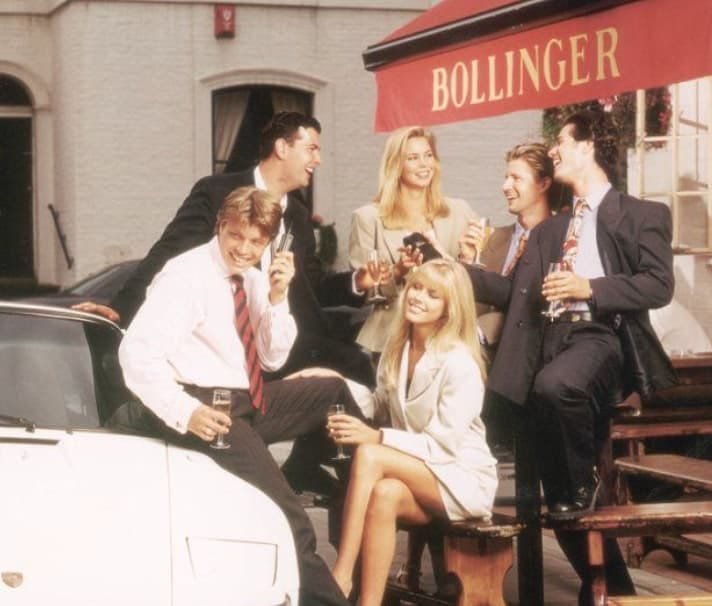
“If you’re old enough to remember the 80s, the term Yuppies conjures an image of sharply dressed young professionals obsessed with money and status. That’s not wrong. Yuppies were materialistic and valued things that sent a message about who they were—whether it was a Cuisinart in the kitchen, a BMW in the garage, or the latest gadget from Sharper Image.” This is the premise of Triumph of the Yuppies: America, the Eighties, and the Creation of an Unequal Nation by Tom McGrath (2024).
The classes we teach about music mostly revolve around the era of the Hippies when the Classic Era of Rock Music was in play. We try to make the case about what value derived from that period of naive idealism that still influences society today: locavore, you are what you eat, environmentalism, community and the social contract, among others. But the case can be made, as McGrath takes a stab at, that the next wave of social ordering, the Yuppies, teed up the zeitgeist that would dominate the future.
Ronald Reagan, Jack Welch, Michael Milliken, A Man In Full. If any of those element of the time escapes you, be advised their mutated offspring 45 years later are running our country today. The back to the earth Boomers of anti-commercial skepticism were blown away, or often seduced, by the back to the city consumers who blithely worshipped at the alter of conspicuous consumption. Unfettered capitalism and the pathway to riches was their belief system, the lesser among the rest of us be damned.
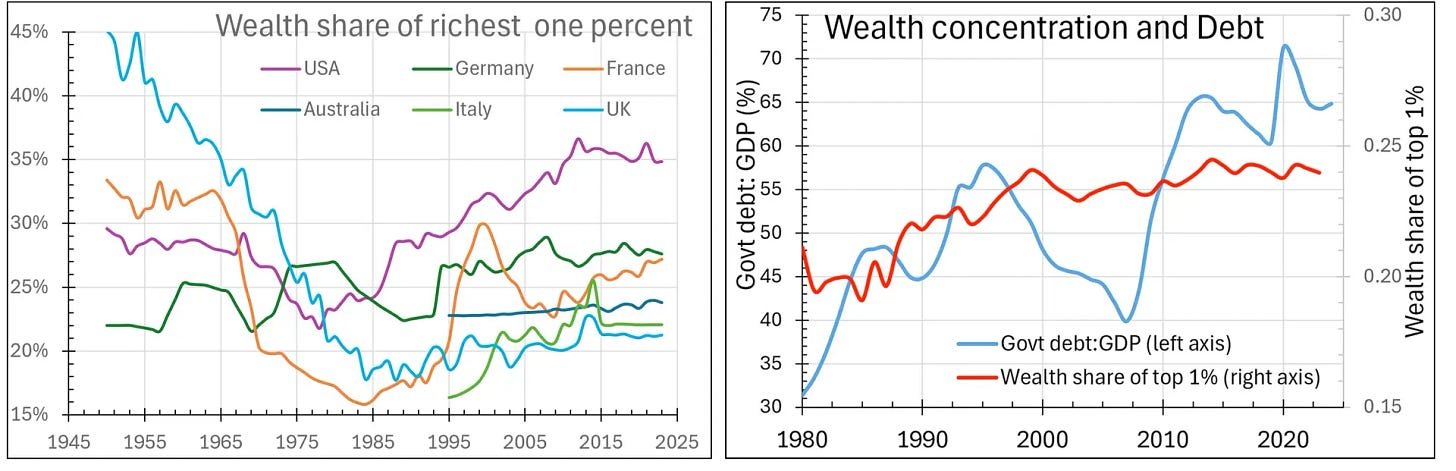
Nearly a half-century of trickle-down economy has left us in a state of affairs that argues convincingly for its overthrow. It isn’t just the lesser of us who suffer at the outcome. Many people made money and lots of people bought lots of stuff but it was debt in many guises that floated the boat. And surprise, surprise, some very few among us were very good at reaping the harvest of those tainted seeds that Reagan planted and the Heritage Foundation watered and fertilized and conjured into being.
When we shrank the size of government, the theory being to starve it of revenue by shrinking its tax base, we put more money in the hands of the people but most of it in the greedy grasp of the very few. There is no surprise perhaps that the benefits of unfettered capitalism is a modest support system for many, an complete absence for many more, and a boon for a sliver of the population at the very top of the heap. The problem appears to be that capitalists are starving the system itself, too.
Debt itself is a handy example. Franklin advised “never a borrower nor a lender be.” Nearly no of us adhered to the first part and a lot of very wealthy people practiced the second part, and that with a vengeance. If I buy something from you for $10 and pay you in cash, and you spend that same ten spot on supplies, and the supplier spends it on stuff, it circulates. If you charge that purchase, the bank takes a slice every time in changes hands. Your ten becomes their ten eventually because you borrowed it.