New Moon Edition July 2024

Sometimes things don’t make sense. Perspective is skewed. Intelligence is artificial, the sum of what is gathered from a repository of ideas good, bad, indifferent and cobbled together into some Frankensteinian beast of an addition to the social system. Then we get to live with the monster.
Sure, people will give you a reason if you ask what it’s all about. They’ll say those incredibly loud and penetrating beepers you hear are to warn people in the vicinity that heavy equipment is backing up and they should be careful not to be run over. That makes sense, except that I am nine blocks away from the action and I can hear it – beep, beep, beep, beep – relentlessly as the project progresses and so can every other living creature between where I am and where a few people presumably might need warning. Do we all need to hear it? Well, we do hear it and wonder why.
Leaf blowers and lawn mowers are another example. The obscenity that is the well manicured and carefully maintained lawn in areas where water is scarce is itself a question mark. The nitrogen and herbicides used to keep it green and free of weeds is another. Cutting it and edging it weekly is a further layer of absurdity. And the coup de graceless is the mighty machine with which we move around a few leaves at the cost of egregious noise and the release of more hydrocarbons into the atmosphere each week than the pollution from a modern car driven 600 miles. Lawns are a toxic soup. We ask if they make sense and why we continue to accept them. Seems they just are.
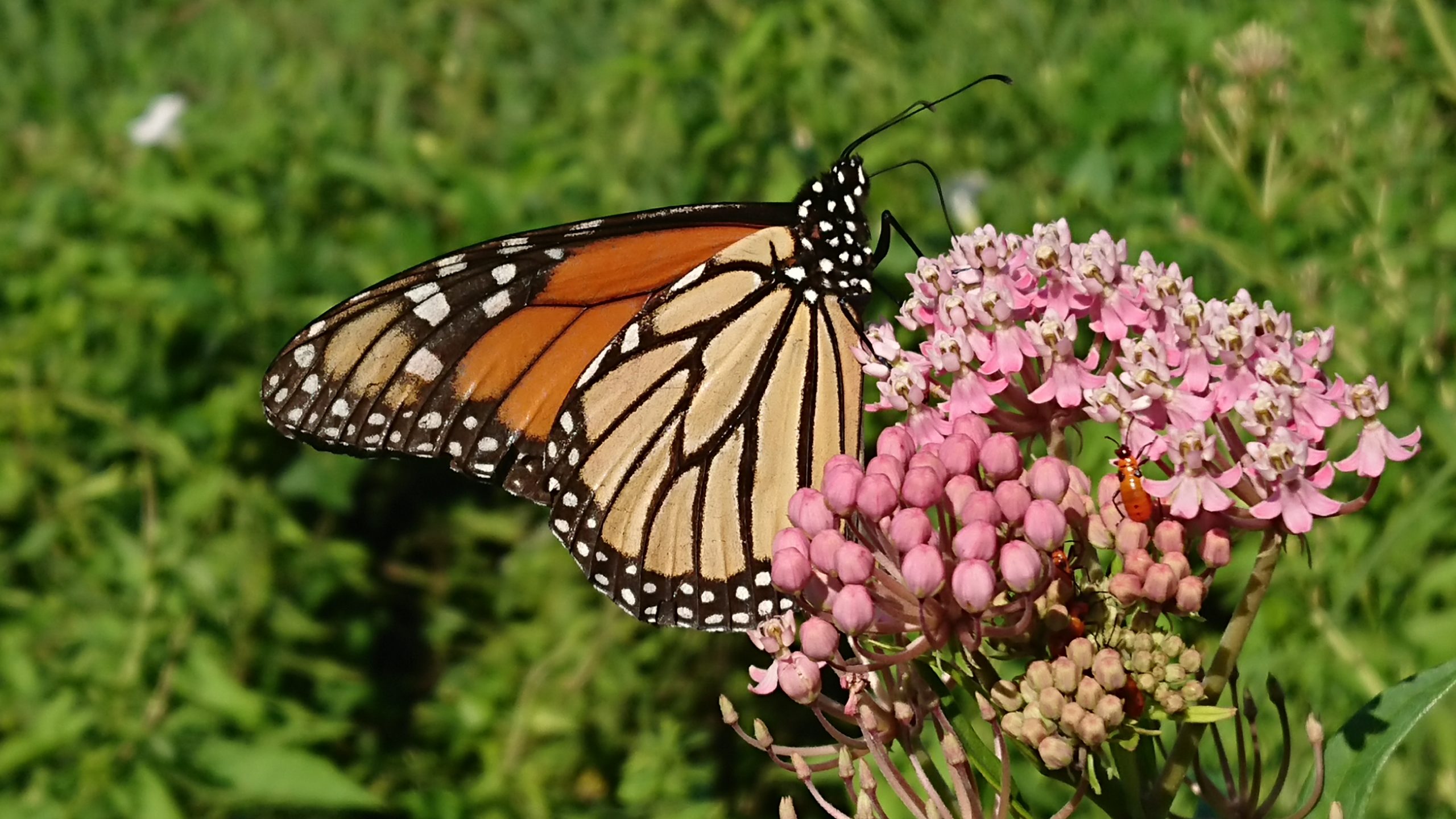
Fortunately, some progress is being made. The Naturalizers and Pollinators, those conscientious and knowledgeable gardeners who would like to establish the optimal urban landscape for healthy habitation, are proselytizing as well as planting. They’re spreading the word as well as the seed.
There’s a lot to say about native plants (HERE), and biodiversity in urban landscape (HERE), but the really big idea is how we can create the biggest national park in the country – one lawn at a time (HERE). This is a very cool thing to contemplate because it begins with information that residential lawns comprise the largest collection of property in the country. It then suggests how dramatically we could transform our natural world by naturalizing all that land.
So much of what I learn about these subjects is from this website and its newsletter (HERE), which comes our way if we subscribe from a brilliant and compassionate landscaper to whom I happen to be married. When she hears my frequent tirades about the absurdity of leaf blowers, Lucretia Weems sagely suggests to me that I offer solutions rather than complaints. The four hyperlinks above offer a few of many great ways to make things better – and more sensical – that are available to us.
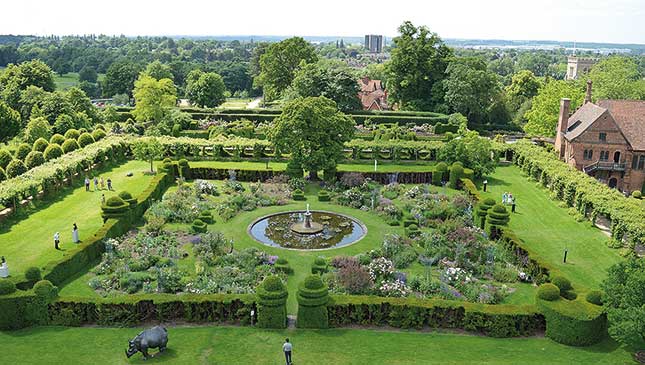
The Anglophile at the root of our obsession with greensward, our image of success and stately homesmanship that pictures a manor surrounded by vast fields of neatly sheared lawn, is an excellent way to keep our staff of 50 occupied, but otherwise is a vestige of the past we hopefully can move beyond. The sooner the better.
There are so many alternative ways to make our yards not only beautiful but also a means of sustenance for the creatures of the natural world and the food web that feeds them. If you don’t have bees and butterflies visiting daily, you’re part of the problem rather than the solution. Hatfield House no doubt has both, but where water is scarce, we could keep the shrubbery and lose the lawn with no loss of habitat and a lot less waste in maintaining it.
Still, there will be leaf blowers because raking and sweeping is, like, so yesterday. Too much like work. But even there a great improvement is at hand. On my walk the other day in Lithia Park, where maintenance machinery too often obliterates the peace and quiet, I saw a cloud of leaves and dust swirling in the air but heard no noise. A park worker was using a new electric blower, which was so quiet I could hear the birds chirping. Got us a solution to the roaring, pollution spewing two-stroke engine if we want it. One that actually makes sense!