New Moon Edition March 2026
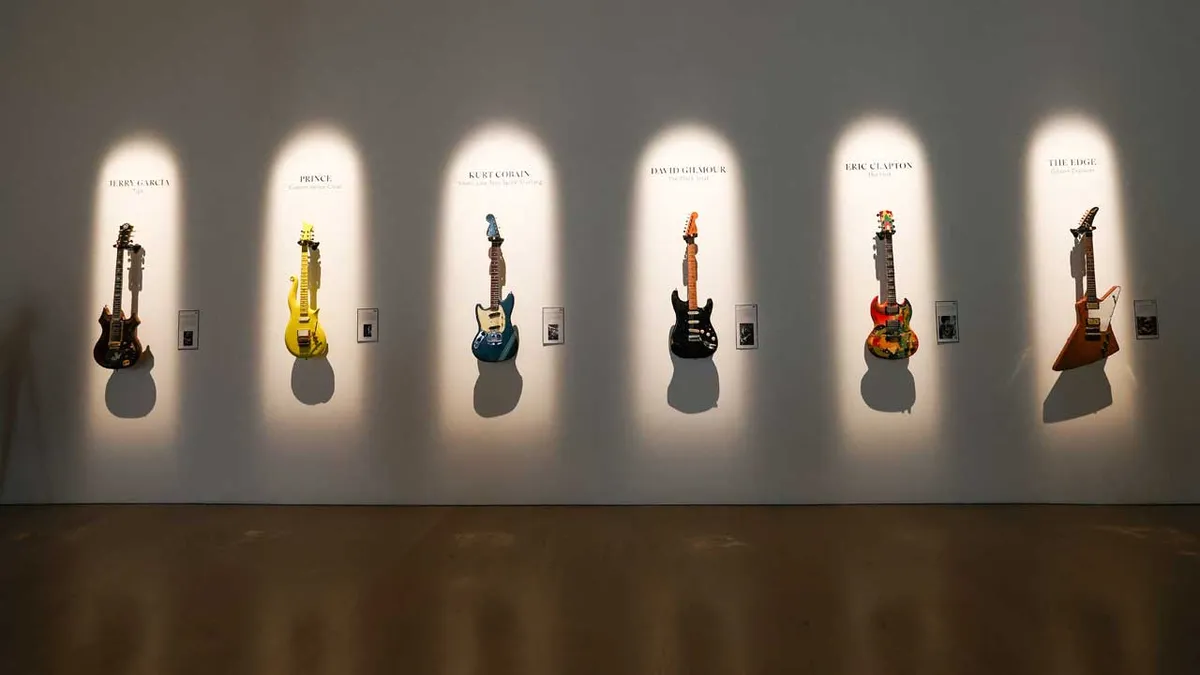
Jerry Garcia’s guitar, a Doug Irwin model he played at the final Grateful Dead concert before his death, sold at auction for $11.55 million recently, which might seem like a lot of money. But then, just to keep things in perspective, David Gilmour’s famed black Stratocaster he played on Dark Side of the Moon and many other Pink Floyd albums, sold for $14.5 million (HERE). Well played instruments of the rock gods, yeah, I get it, but is the larger takeaway perhaps that money no longer has any meaning?
There’s just so damned much of it, you know? Very old money, pretty old money, very new money, deeply nouveau riche tech titans, the killer kleptocrats of Russia and the former Soviet Union, the oil sheiks of the Middle East, those crazy rich Asians, and, of course, our own All-American plutocracy, those paragons of capitalism prospering under the protection of the best government money can buy. Greed is good, said Gordon Gekko, and we all said, sure, well, of course. But only a few truly benefitted.
One such billionaire was the late Jim Irsay, whose collection of rock memorabilia including that group of guitars was at auction. Mr. Irsay inherited the Indianapolis Colts football team, one of 32 National Football League clubs each of which is worth many billions. Because the City of Baltimore, where the team had played before loyal fans for 30 straight years, refused to build him a new stadium and Indianapolis in its quest to become a big time metropolis said, “Hey! We will,” his father, Robert, moved that team literally in the dark of night to more lucrative political climes. Other than the need to live in Indiana, it was a cool move that bought his son a lot of very fine guitars.
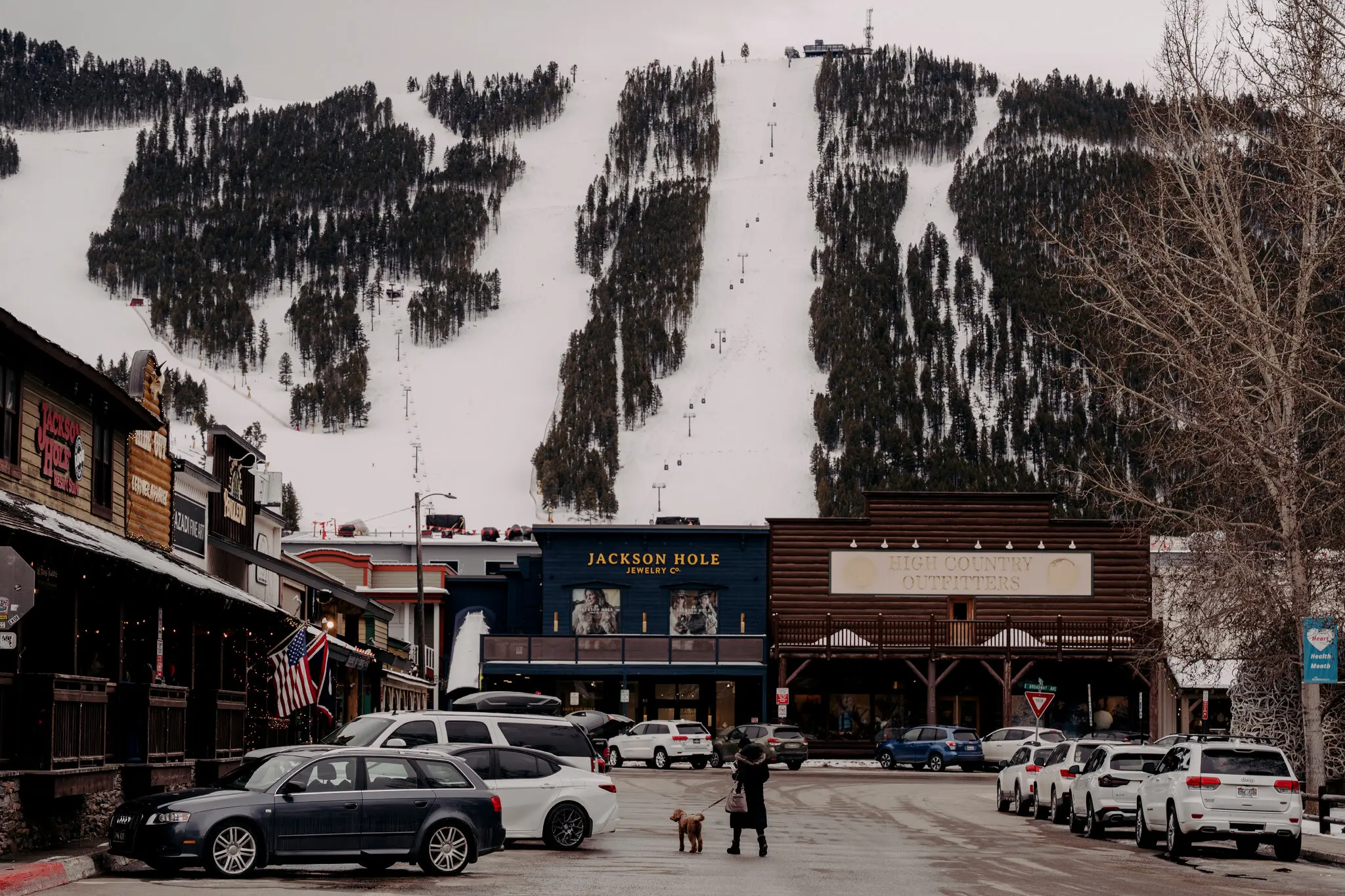
A distinctly prosperous enclave in the otherwise sere landscape of our least populous state, Jackson Hole, Wyoming has made Teton County the richest community per capita in the United States. It also may be a harbinger of the entire country’s future, where the wealthy 1/10th of one percent come to totally dominate not only the financial system and the distribution of wealth but also all the politicians, the policy makers, and the duplicitous political system that so willingly enables them (HERE).
We once held the perhaps naive notion that our two-party system of democracy posed clear choices: Republicans who represented America’s landed gentry and corporate tycoons, and Democrats who looked out for the rest of us. Labor unions and a few limousine liberals struggled to parry the monied thrust of the well-heeled in financing political campaigns of the rival candidates. That was then. Back before the rise of the billionaire class and its insatiable craving for bettering its own grossly bloated status, buying elections with millions so pet politicians of both parties enact laws that save them billions, regardless of the consequences for the rest of us (HERE).
Do you ever think about money? Ha! Don’t we all in mulling over how to pay the bills indulge that fantasy about being rich? Having more than enough bucks to never again worry about it? When we consider such thoughts today, and look to the people who are in that position, we note they seem to think of nothing else but money and ways to acquire more. Might we wonder if avarice like addictions of any other sort is nearly as attractive as we’ve been taught to believe? The wealthy used to be entertaining and moderately aspirational. Today they bother not with pretense of civility in privilege so vividly portrayed and nakedly self-referential, it begs us to explain away the stupidity of how little we accept to be so cravenly exploited. Maybe we should tax them.
When things are stretched to the limit, an inflection point reached, as seems to be our divisions as a nation, and perhaps the underlying financial system, as well, things may be bad enough that dramatic change is the only reasonable option. Thich Nhat Hanh said the next Buddha will be the Sangha, that community centered in the pursuit of awareness and harmony, two states of being that are in short supply in the current social environment. Is it possible for society to find common ground sufficient at least to function toward a goal of bettering the social order? Can we at least try?
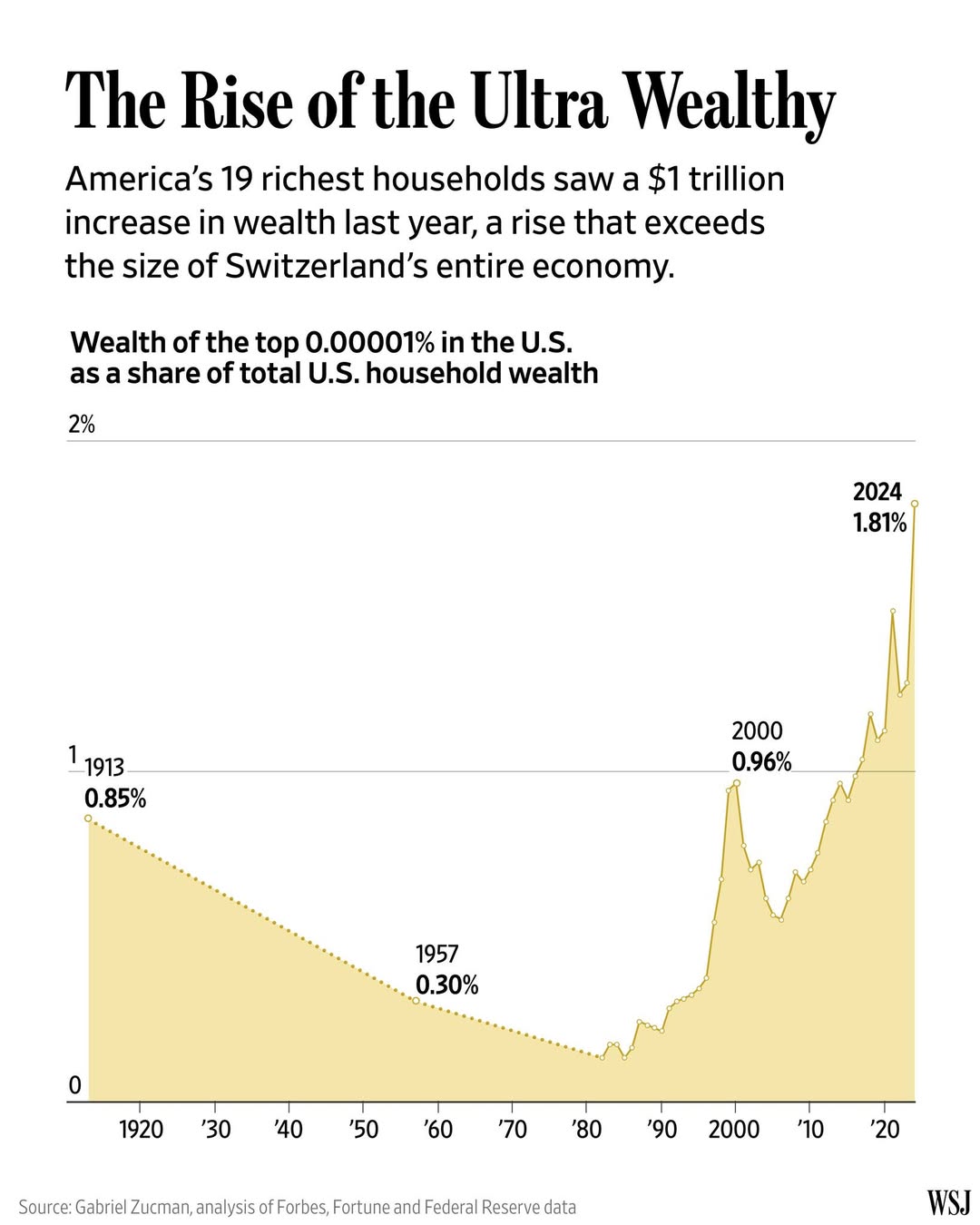
How else might people mount a resistance to being steamrolled by the relentless pursuit of profit by those acute practitioners whose only motive is more. More money, more power, more dominion over the fate of the lesser beings among us. Even Adam Smith, whose Wealth of Nations is the bible of unfettered capitalism, believed the purpose of wealth creation was the elevation of the community and not merely a few entitled individuals among them (HERE). He failed to anticipate the disappearance of empathy as a tempering mechanism. We can only wonder what he would make of the chart above. That gross disparity of wealth defies his concept of free enterprise.
As AI devours jobs and people become unemployable, is the endgame of capitalism being revealed (HERE)? That profit has become the sole purpose of the marketplace and now that robots can replace them as labor people are obsolete. Have we finally reached the point at which expanding the wealth of the very few is reason enough to obliterate society and make the mass of humanity disposable? Will some people be kept as pets so the wealthy, those uber-humans, might remember what the rest of humanity once was like? Tell me true: can’t we do better in shaping the social order?