New Moon Edition January 2024
Well, to tell the truth, I woke up this morning to snow on the ground, a rather rare thing in this valley, and only while sweeping the sidewalk clear (haven’t owned a snow shovel since we left Colorado 20 years ago) with a beat up old broom did my beat up old brain realize that today is the first new moon of the year and Three Quick Things was due. What to say?
My daughter, Deva, got me started writing a newsletter a couple of years ago and in doing so stressed (like a person well aware of my reluctant response to schedules) the importance of dependably delivering the goods. To my credit, I’ve done so without fail every new and full moon for some 30 months now. Today could have undone that streak but here we are.
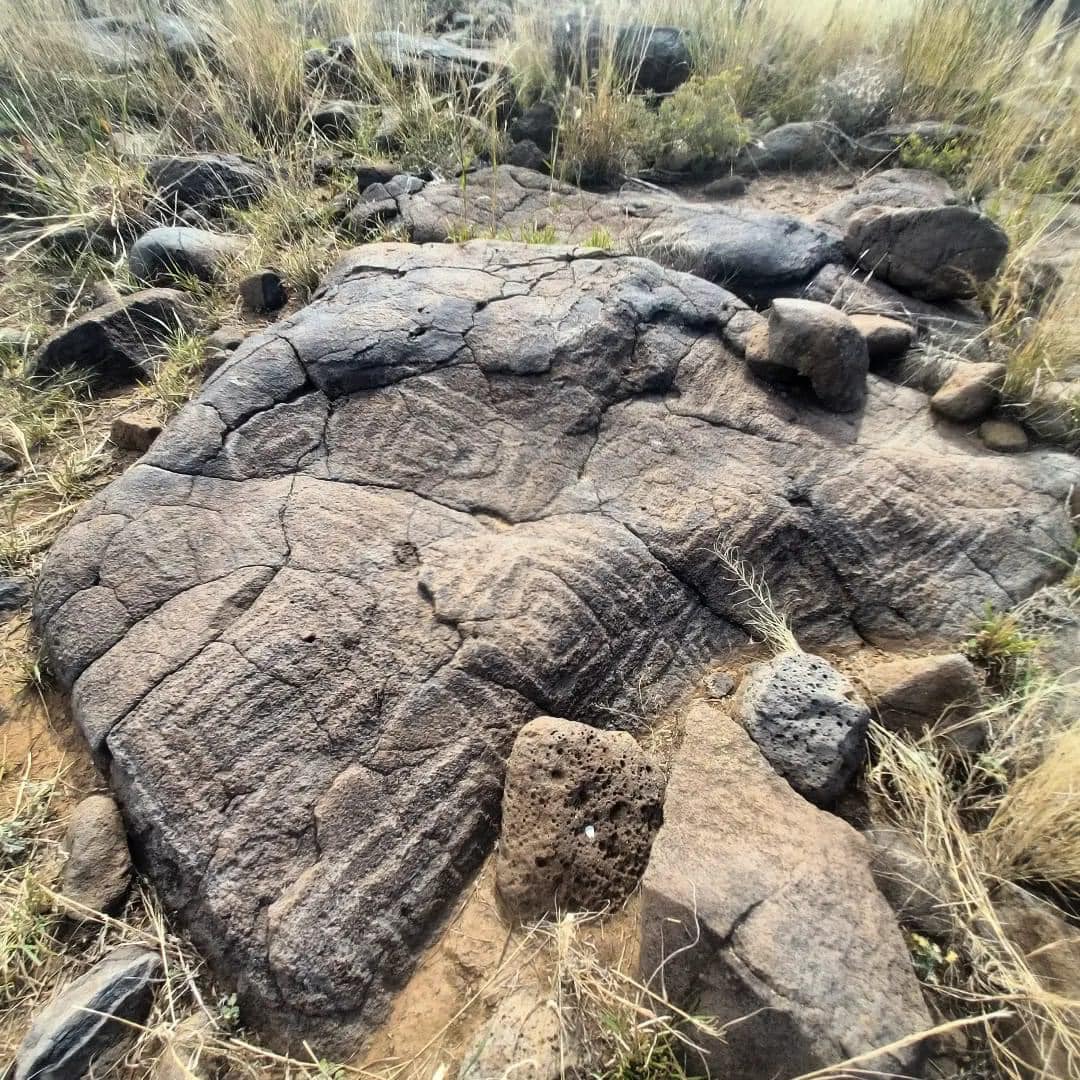
The photograph above is of petroglyphs of the Hohokam Culture, people who inhabited the Southwest of what today we call North America from the very earliest time of the current era (CE) and maybe a few centuries before to perhaps 1500. So much of what we know about the Ancient Ones is cloaked in speculation and I like so many others am fascinated by all the possibilities our little knowledge offers.
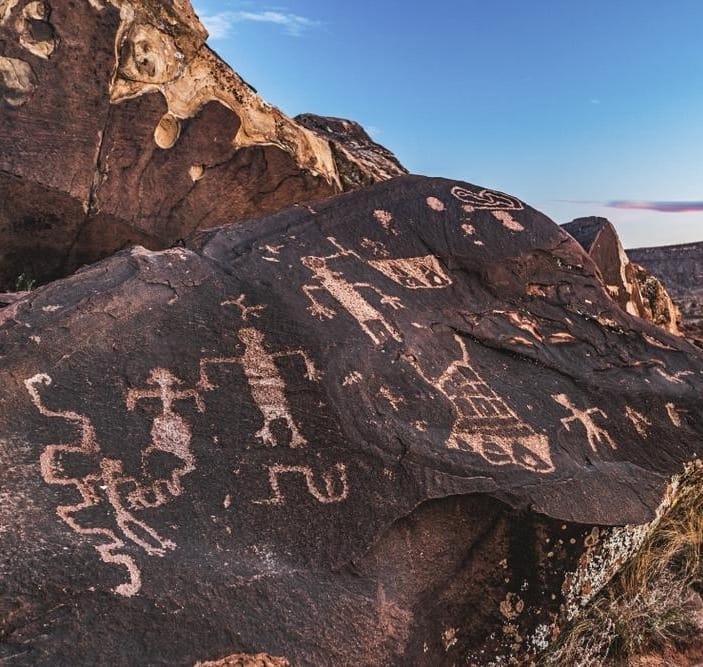
The more recent petroglyphs shown here are in the Santa Clara River Reserve of present day Utah and suggest that these peoples, too, likely had daughters who told them to jot it down for posterity. Maybe like me they had the urge to have their say and just needed a little nudge. Whatever their motive, we would be the poorer if they hadn’t made the effort to reach out to us. I don’t know that anyone will say that about Three Quick Things centuries hence, but we’ll never know if we don’t try.
The subject of ancient cultures is on my mind not only as a matter of newsletters old and new, but because of a class I just began teaching on Tuesday about the American Origin Myth and Manifest Destiny. It’s titled Mythologies of the Modern West and is a look at growing up Western, the stories we tell ourselves about who we are and how our society came to be.
We note immediately that the West was just west of wherever we happened to be at the time, and so those born east of the Mississippi are in many ways no less impacted by the influence of Western Mythology than the rest of us. The West is much more than just a geographic place; it’s a mythic realm in our Origin Story.
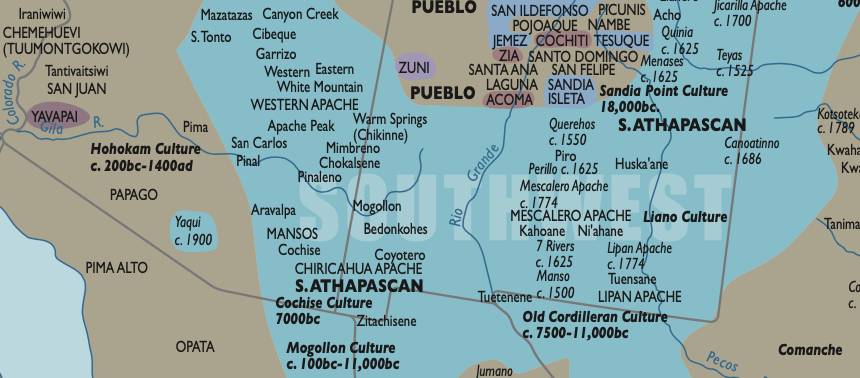
That of course leads us to consider who was here before us and what role they’ve come to have in our Mythologies. Any honest look at the treatment of the Indigenous peoples of the Americas is a dark and dispiriting subject to explore, and I wondered going through the first of several sessions whether the class would be too depressing an experience.
The intent of this class, though, is to think about what new mythologies we might create going forward, what new stories we might tell ourselves that could include a more inclusive role for all of our people, which suggests the possibility of some light up ahead. What Sharon Blackie calls the Mythic Imagination has limitless possibilities to shape and reshape our societies. With that in mind, I’m really looking forward to seeing what responses this class elicits.