New Moon Edition February 2024
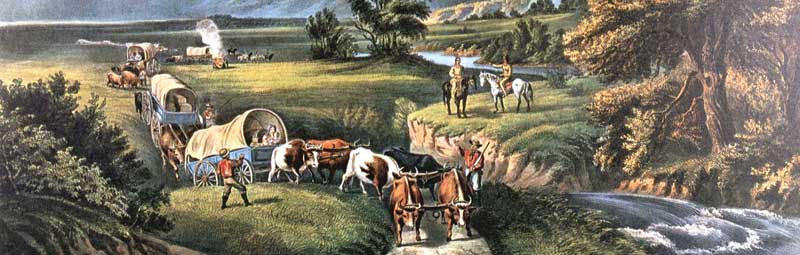
Money. Success. The free enterprise system. The rugged individualist. Tall in the saddle. Overcoming adversity. Conquering the wilderness. Establishing civilization. Making the land productive. Raising up wealth from the earth.
Those themes have been on my mind in writing and lecturing about Mythologies of the Modern West, the American Origin Myth and Manifest Destiny, all the stories we tell ourselves about who we are and why we do what we do. We raise the question whether this spectacularly successful creator of prosperity, pursuing the American Dream, has perhaps played out. Fewer people are holding ever larger portions of the wealth that’s created. More people are edging toward poverty. And the earth itself seems to be suffering. For whom and what purpose then are we creating wealth?
Sharon Blackie calls mythology “the universal tongue of human imagination.” (HERE) She suggests that we can use that imagination to create new stories for the pathway going forward. The stories we’ve told ourselves about who we are as a people and a society have carried us over centuries to where we are today. What new version of a Hero’s Journey might we create in pursuit of a sustainable future? What might the Mythic Imagination conceive as the legendary way to tomorrow? It’s clearly worth some thought.

Capitol or capital? I was astonished by a recent news article about the fellow who stole and leaked the tax returns of thousands of the very wealthy, including a former President. He was sentenced to five years in prison, a not very surprising outcome in a nation so fond of incarceration. What was unusual though was the claim by the judge that the guilty’s actions “…engenders the same fear that January 6 does.”
In that the assault on the nation’s capitol resulted in deaths and the imminent threat of bodily harm to members of Congress by a raging mob, one might consider the judge’s opinion hyperbole at best and hysteria at worst. But, then, the relative worth of “your money or your life” always caused Jack Benny to pause and think it over, a comic’s way of taking a serious look at our value system.
The leaker, 38 year old Charles Littlejohn, allowed that he acted out of a sincere misguided belief, being: “We as a country make the best decisions when we are all properly informed.” There are many societies where upon newly meeting someone, an early question is, “How much money do you make?” The United States clearly is not among them. Rather, it appears the wealthier you are, the more critical your need for secrecy. Who among us can tolerate rabid mobs scaling our tax returns?

And talk about raging mobs, have you noticed? They’re back. At least the first few raucous notes of what soon enough will be the daily cacophony when the lawn crews arrive with their two-stroke machines. Perhaps the recent silence, that brief pause after all the leaves are blown to hell and gone and the first slight growth of grass appears, perhaps that rare and profound moment of peace eluded you, accustomed as we are by now to the tyranny of lawn and leaf.
It’s not nearly as scintillating to our heroic impulses as mega-wind and solar farms are in generating immediate community commitment to solving the climate crisis. Yes! Nonetheless, we might give thought to what a relatively simple policy initiative could do to vastly reduce noise and air pollution in our towns. Gas powered lawn mowers and leaf blowers not only deafen our neighborhoods day in and out, they put massive amounts of toxic gases into the air. It is reliably estimated the common leaf blower in one tour of your lawn emits more poison gases into the air than a 300 mile automobile trip across the state to Portland. Not to mention the blankety-blank racket!
Electric leaf blowers can be had that are far less noisy and much less toxic. Two would be required for professional use: one charging while the other does service of an hour or so on a single charge. As a community we could figure out a way to incentivize their adoption. An even niftier policy change would be to designate neighborhoods by days of the week when lawn care of this sort is permitted, so that it impacts us once a week rather than daily. Simple change, not very exciting, but VERY effective policy!