Full Moon Edition February 2024
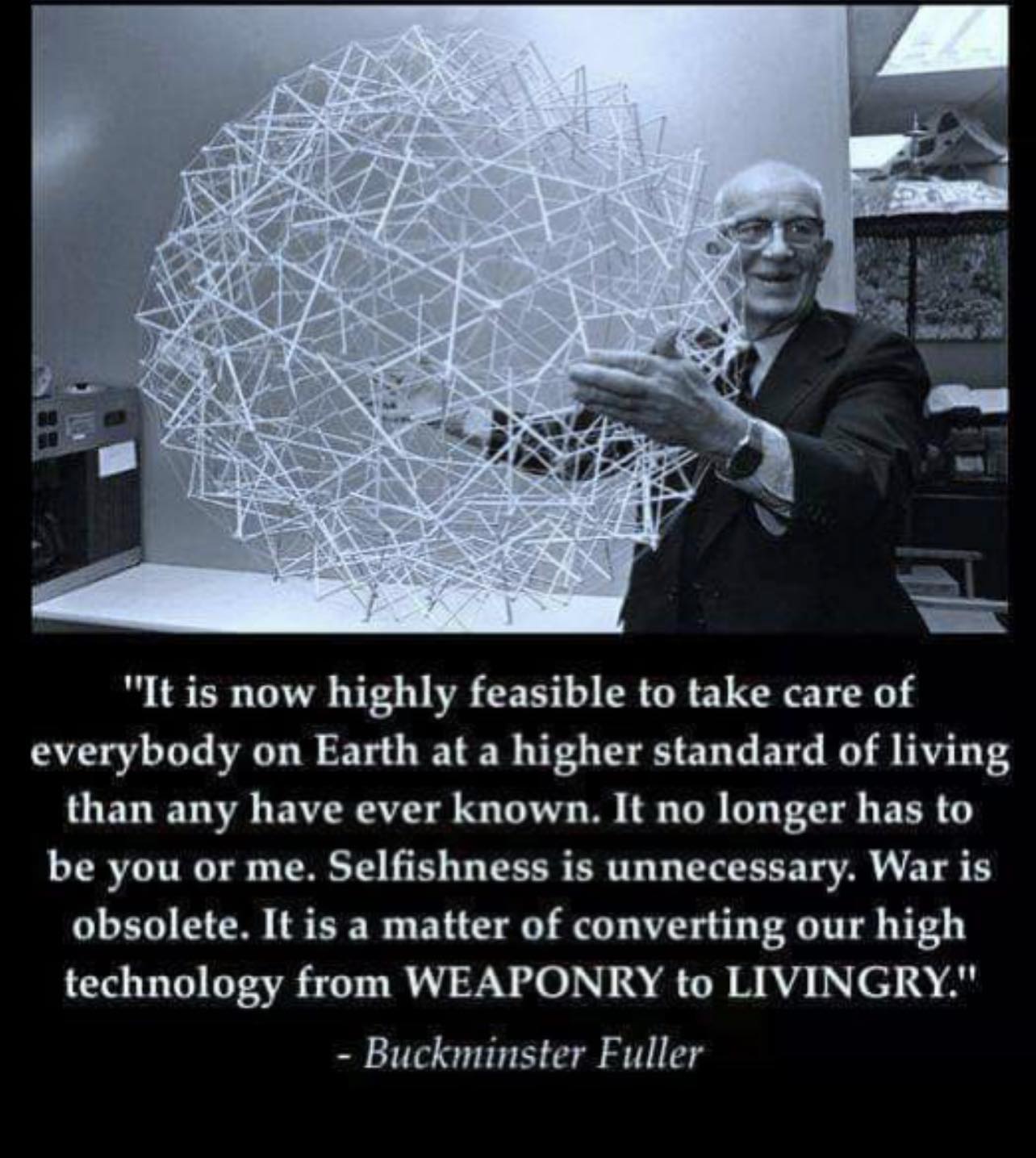
My first encounter with Buckminster Fuller was a presentation he made at the Conference of World Affairs at the University of Colorado in the early Sixties. He was an astounding speaker for so many reasons, but what I took note of at the time among so much he had to say was his statements about the world being beyond scarcity and the implications of that concept.
I believed him, even though the preponderance of information coming my way said just the opposite, that the world population was growing faster than our ability to feed it, that you better grab the best job you can find and hang on for dear life or end up like the bums you see sleeping on the sidewalks down at Skid Row. No need these days to go have a look for yourself because Skid Row now is coming to you.
Eat or be eaten. Survival of the fittest. Zero sum game. The belief that evolution itself was driven by genetically rewarding the victor. Breed the best to the best and the offspring will be even better. And maybe it was so. The evidence was everywhere, we were told. And the belief in that essential truth was gospel. Who to believe? Or whom?
Bucky Fuller told us those days were past, that the harvest had come in, that scarcity was no more, the largess was in hand. That was 60 years ago and yet we still conduct our affairs as if the wolf is at the door – someone else’s door, give thanks, feeding on the weak while the rest of us keep pedaling as fast as we can to keep from being run down ourselves. So where’s the disconnect?
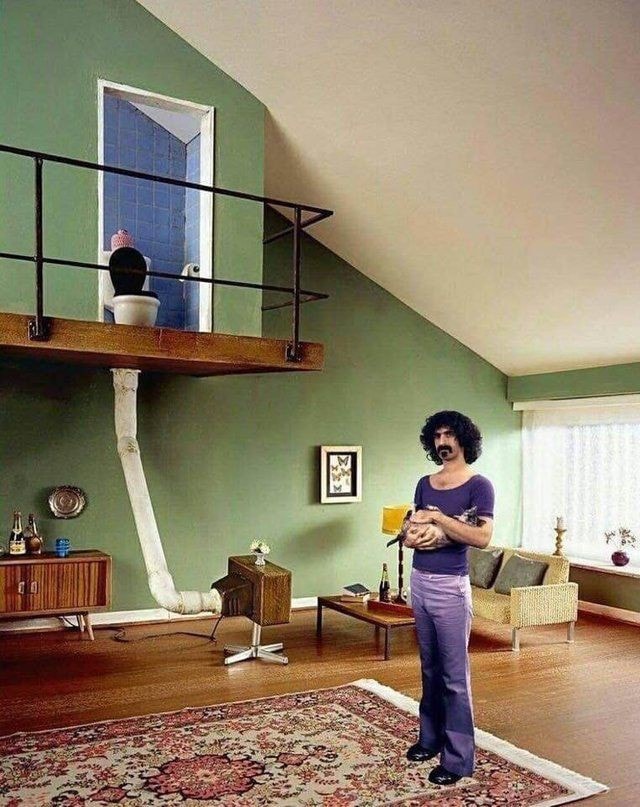
Back when television was the principal source of popular information and entertainment, the two of them being well on the way to becoming one and the same, Frank Zappa gave us a look at the source material. One wonders what he would make of social media, that today all our sources of information are of that ilk, propaganda mills hawking for advertisers and the bling they need to sell.
When everything is true, nothing is true. We called it spin, then alternative facts, now it’s simply undisguised fabrication. Telling the story we choose to tell, absent factual basis, because it is our way to winning. Someone will believe it and we have shit to sell them so we can get ahead. So we can succeed. While others necessarily fail.
Swords into plowshares I believe is what Mr. Fuller meant by “Weaponry to Livingry,” that the War Machine at the heart and soul of our economy could comfortably transform into producing sustenance and true security. I don’t think he anticipated converting our high technology into ever more sophisticated advertising media to better calculate what kind of bling we’re most ready and willing to buy. But that’s what we did with the peaceful technology. We’re still building weapons as fast as we can.
We’re still talking about that concept of a post-scarcity economy, too. The subject pops up here and there. Maybe it’s simply another dose of entertainment, but Oshan Jarow wrote a fascinating article in Vox (HERE) about what we might accomplish if we ever freed ourselves of the fear that there simply isn’t enough to go around. He claims economists are considering it. He talks about it in terms of imagination.
We Americans have created and sustained a staggeringly successful economy for wealth creation. Any suggestion that it should be tampered with, tweaked for one purpose or another, unleashes a torrent of derision. The proponent fails to understand the necessity of keeping this pristine medium of prosperity unfettered in its sanctified state. Simply let the rich be rich and the rest will take care of itself.
Since ideas are so yesterday and debate an artifact of a time when we thought there was truth to be had, statements all are suspect. Perhaps only questions can be asked when the support system for the status quo is so finely tuned. Here are my questions: what is the purpose of wealth? Why do we create it? How much is enough for our personal use? At what point if ever can we turn our attention to the needs of the social contract? If not now, when? How much do we need before that can be possible?
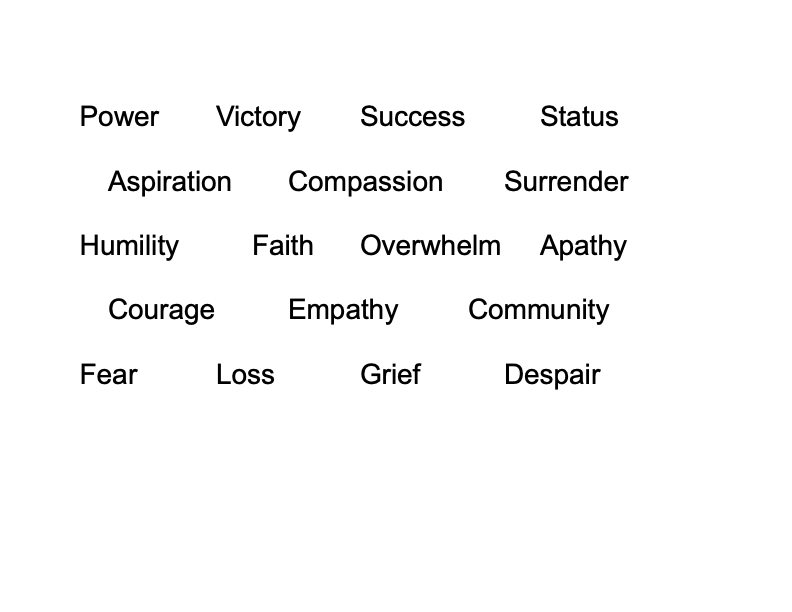
The graphic above lists some concerns of the human psyche. The myths, legends, folklore we have told ourselves for eons grow from that very long-lived era of scarcity. Sharon Blackie (HERE) has defined the Mythic Imagination and suggests it may well be time to create new stories to tell ourselves about who we are and what we value. Some more questions then: What might heroic be if newly defined? What might be victory? Success? Community? What might be our new mythology and what the tales it tells us? Is the psychological imperative hard-wired in our being or can we change?