Seasonal Blue Moon Edition August 2024
There are a lot of great stories in the history of radio. Being focused on freeform radio as we are, we can assure you there are many terrific tales to be told about that brilliant period of broadcasting. None is bigger or better than the story of WFMU-FM in New Jersey. A young writer named Elena Razlogova is in the midst of telling it.
Elena is a media historian based in Montreal, Canada who is writing a book on the subject of that early-on-the-scene and amazingly long-lived station, which still today is showing us what can be so remarkable about radio and the community that grows up around it. The history of how it came to be and why unlike so many others it has grown and prospered is the story Elena is telling. Fortunately for us, she’s shared a look at the early days when WFMU was first finding its way (HERE).
Ken Freedman, the station’s General Manager since 1985, is a principal reason for that success. He’s keenly aware of the power of radio and extraordinarily well-spoken in sharing his knowledge. The interview he did with us for www.radicalradio.media some while back is among the most illuminating and memorable in clarifying exactly what it is that makes freeform radio matter (HERE).

Maria Pagano of the Paley Center for Media came into our life recently by helping us uncover several video-recorded conferences about the Rise of Freeform Radio. One was about KMPX, KSAN, and the other California FM stations Tom Donahue launched as freeform radio; one was about Metromedia powerhouse WNEW-FM in New York, the flagship for that corporation’s many flirtations with freeform at its FM stations around the country; and one was about WFMU-FM, which unlike the others began as a college station and evolved into the most notable listener-supported freeform station in the country. Unlike the others too it is still algorithm-free programming.
Those conferences were held in 1997, so a lot a radio water has flowed under the bridge in the past quarter-century. It’s interesting the subject of what was so special about freeform radio in its many different manifestations still is intriguing as it was when these conferences took place. Interesting too that even then the sense of what was coming – the dominance of the public airwaves by a few corporations for no purpose other than making money – was on the panelists’ mind.
Consolidated control of the airwaves, and ironically the opening up of internet-based broadcasting, was having an effect that they noted even then: only the biggest and most successful acts got airplay. One panelist said the trend was “destroying the middle class of musicians …“ Elon Musk and Beyoncé might be strange bedfellows, but they are emblematic of success in an economic system that has room only for the most profitable manifestations. C’est la guerre!
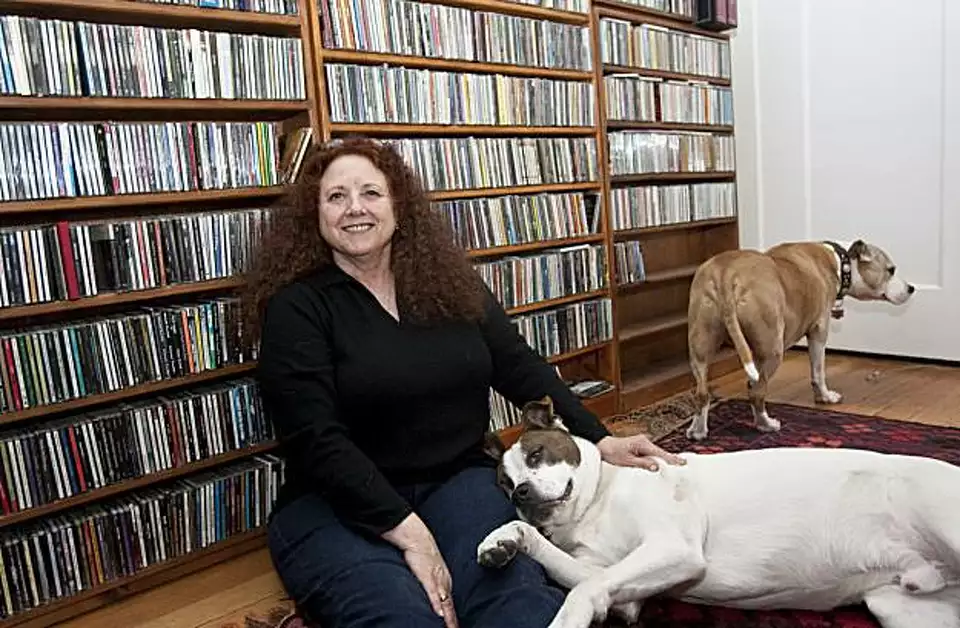
Bonnie Simmons started in radio in 1970 at KSAN-FM in San Francisco. She was the record librarian. Five years later, she was program director and on-air talent doing 20 to 30 hours of shows per week. She quickly became one of the best known and highly respected DJs in the industry. Nearly 55 years later, she’s still doing radio once a week on Pacifica station KPFA. Her show is pure freeform. She plays what she wants. Her shows have earned her induction into the Rock Radio Hall of Fame.
KSAN had a glorious run as a freeform station back in the day, but like nearly every other of them broadcasting the brave new world of FM radio, corporate interests eventually took control. Like her colleagues who found a way to stay on the air at one station after another, Bonnie dealt with all the changes and persevered as commercial radio became increasingly homogenized. She remembers fondly that time in the Seventies when all those freeform stations across the country perfectly reflected their individual communities in the way they brought them the music.
During a Zoom call with her recently, she talked about all the things in addition to radio that keep her engaged, including work as Executive Director of the Bill Graham Foundation and transport chief for Warren Hellman’s Hardly Strictly Bluegrass Festival, which draws some 750,000 in the Bay Area the first weekend of every October since 2001. Once this year’s festival is wrapped and her calendar clears, she promised us an interview for the radicalradio.media archive. We suspect she’ll have a lot to say and we’re looking forward to it.