New Moon Edition April 2025
Did you ever imagine you’d end up panhandling? I didn’t, although I’m not terribly surprised. Little did we know at the dawn of the personal computer age that online commerce would require we persistently beg for support. It’s the nature of the beast and everybody does it. Please subscribe. Can we have your attention, please. Before you go, please read this. What they all say is: we need your money to get by. Please! And if you give, be assured they’ll need it again tomorrow. It’s all Indie all the time.
The platform supporting this newsletter is called Substack and it is the very hot thing among creative types for a number of good reasons: it’s very intuitive and reasonably attractive; ownership of material that is posted is the creator’s and you can take it with you if you choose to move on; it’s a good place to stash your work rather than letting it languish in a storage cabinet where no one will ever see it; and, it’s use is free! Substack the company pays its own way by taking ten percent of whatever commerce you generate behind a paywall should you decide to build one. An example:
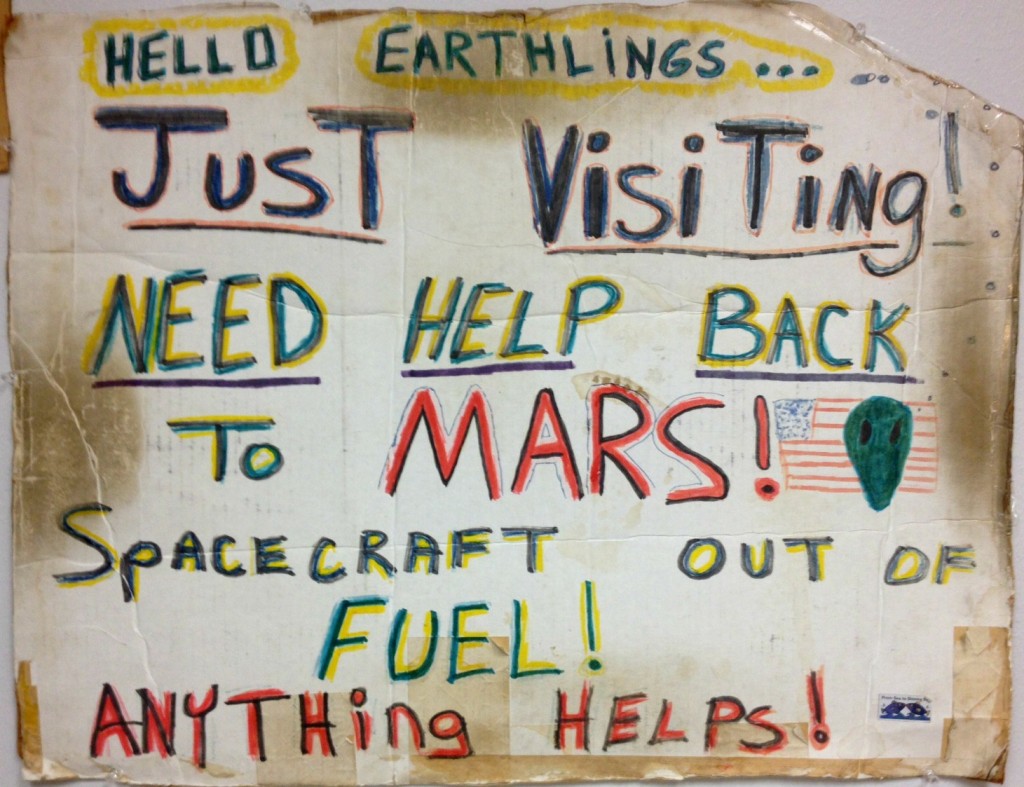
The platform does encourage use of all the bells and whistles that drive those highly desired paid subscriptions, and even generates occasional solicitations of your mailing list without your active participation. Discounts for subscriptions. Discounts for gift subscriptions. Whatever might work. So all of us who hawk our work online better never look down on the hardbitten folks staffing each and every street corner in town with their “Anything Helps” messages on cardboard signs. Theirs is simply a different platform from which to make the ask, and sometimes more creative, too.

Artificial Intelligence. Two words that seem to me to be in conflict, but no matter. It’s here and it’s making a stir and we will be the better or the worse for it, one imagines. Because like all the other whiz bang technology the Revenge of the Nerds unleash on us, it will raise our world to perfection or destroy it utterly, so intense is its capability, so extensive its reach, so profound the difference it can make. Take that!
It’s like Edward Teller said about the atom bomb: it depends on how you use it. As a tool for research, even with the hiccups known as its hallucinations, AI is stunning. Days worth of work delivered in minutes. The ability to refine and re-refine the depth of the analysis it delivers. And compliments aplenty for the quality of questions you ask. It’s so well mannered and courteous. It simply couldn’t be nicer. Sorta.
And it can really produce. AI is to Google as Word was to WordPerfect, if you’re old enough to remember that transition. It’s a startling advance in search capabilities, whatever else we might say about it. And it raises questions about what rights it might claim if it continues to exhibit quasi-human capabilities (HERE). Will AI advocates push for its inclusion in the family of hominids, as animal rights activists did sometime back for the higher apes? That might be an excellent question to ask of it. Hey Chat …
If you paid attention in your Ancient History class, and we’re told that some of you actually did, you remember that the Sumerians were the earliest civilization, dating back some 6,000 years. They organized into an urban community, some learned to read and write, make art, master agriculture to feed all those people, and developed a hierarchical social structure so a ruler could compel labor from the lesser among them to build those structures that still today stand in ruin. That’s civilization (HERE).
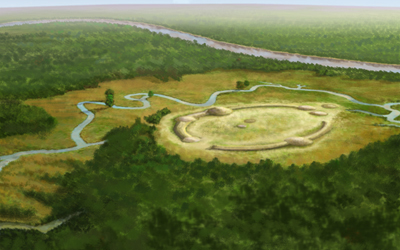
In the piney woods of Northeast Louisiana near a stream called Watson Brake very late last century a family decided to log their land. After that dense stand of trees was removed, they noticed the ground had been altered sometime in the distant past. There existed at that site a circular series of earthen mounds, some as small as three feet high and some standing 25 feet tall, connected by a ridge that defined a central courtyard. It was the site of ancient mound-builders, the Evans Culture, who were previously unknown. For what purpose they built them there is no certain clue.
Imagine the surprise when archeologists after careful study dated the community to some 6,000 years ago, contemporary with Sumer. It fundamentally upset the tenets of ancient history, but also led to a reconsideration of how civilization itself is defined. These were not agrarian people who built these mounds, nor was the site occupied year around but nevertheless was maintained for some hundreds of years. Nor was theirs a socially stratified society with a ruler commanding the troops. They may have been preliterate, but they organized in civil ways and probably built these mounds as a civic activity, not only as a way of marking their place in the greater world around them and to access a higher perspective at times, but perhaps just for the fun of it.