New Moon Edition July 2025
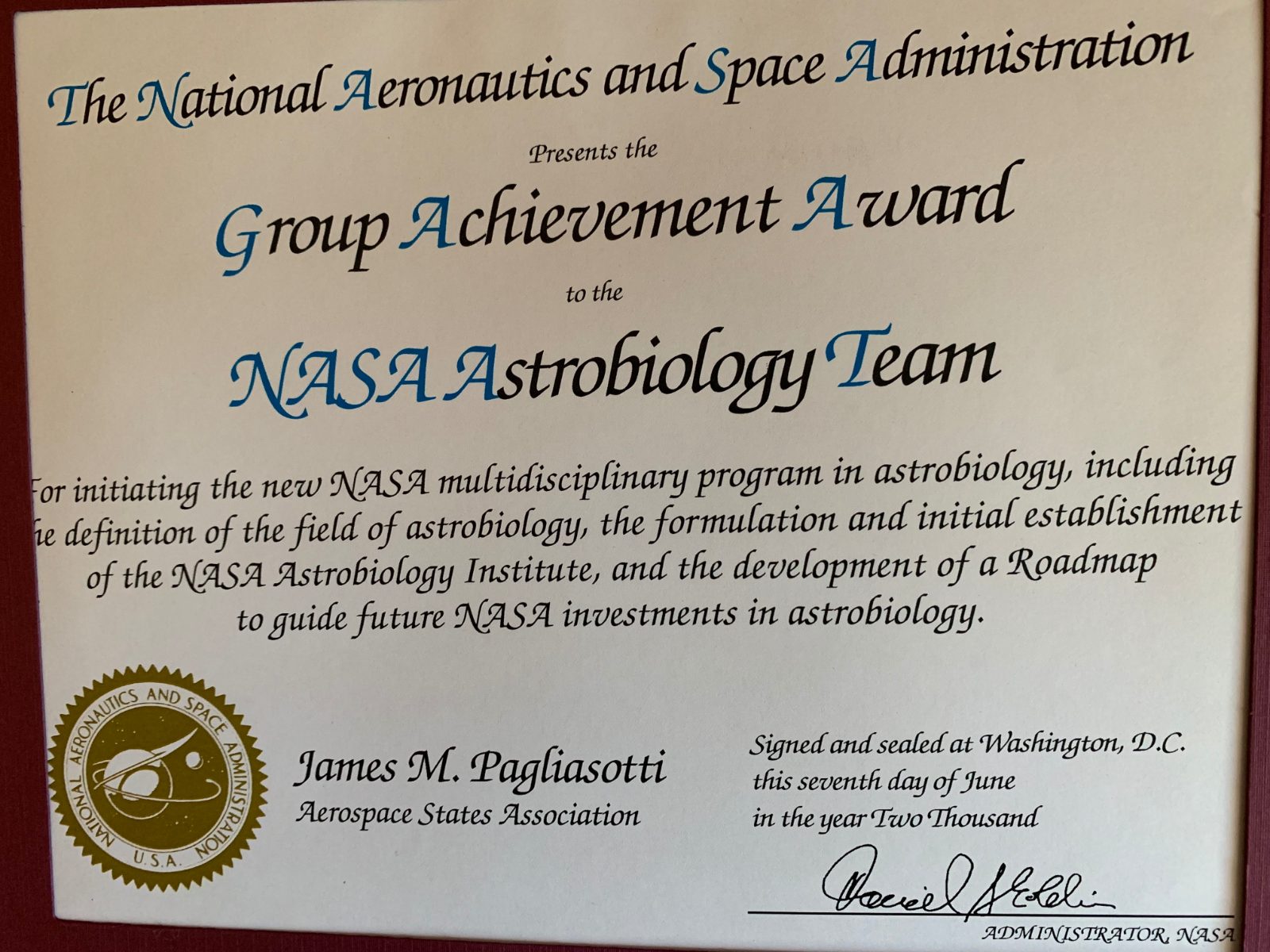
NASA, like many other agencies funded by the government that are out of favor with the current administration, is under siege. There is yet the latest of frequent efforts underway to strip the agency of the budget for a number of its traditional functions. Wiliness is perhaps its most traditional function, being an operation with a strategic physical presence in key congressional districts throughout the country where it’s all about jobs, so it may yet again win the war after suffering here and there in battle.
Continuous refinement or reinvention of its raison d’être is among its principal skills. Along with the big boy aspirations of moon and mars, there are any number of other enterprises cooked up in the kitchen of necessity – the agency’s if not the public’s. The International Space Station, a cool feat of bending metal and not much else, was one such enterprise where nothing was accomplished over thirty years at a cost of a trillion dollars. But needed or not the astronaut corps now was assured to fly again.
Each effort to gut a program or an entire research center is met by the discovery of an absolutely essential new role that can reinvigorate public support for the agency and buy Congress another fistful of votes come election. One evening in Mountain View, CA over dinner and tee many martoonies, I had a hand in creating one. To protect the Ames Research Center from closure, a brilliant, undervalued young woman named Lynn Harper – being merely a Master in a place awash with PhDs – was digging for the rationale. “Extraterrestrial life always gets people revved up,” I said, being well over the moon myself from the vodka. “Yes!” she said, “that’s it! We’ll call it Astrobiology.” Bingo! Ames became the lead NASA center and Astrobiology still is thriving today.

The search for extraterrestrial life might well be undone by our too human propensity for self-referential perspective and its underlying egocentricity. A wonderful article in Aeon (HERE) explores our tendency to conceptualize life wherever we might find it in our own image and its language in our own tongue. Francis Godwin, it tells us, not only wrote the first science fiction book in 1638, but also was first to speculate about an extraterrestrial language that “consists not so much of words and letters, as of tunes and uncouth sounds, that no letters can express.” But did we listen?
We like things in their proper slots – a place for everything, etc. – and so the Periodic Table of Elementals, Linnaean Classification, Dewey Decimal System, those structures within which our vast knowledge is settled for ease of access and retrieval. If only life was so easily explained and people particularly so. The three main body types, seven types of human movement, eight types of psychology, five principles of phrenology (oops, scratch that one – no longer in vogue). Within each of them is a miscellaneous category reserved for Other, those who fall between the cracks and they are many.
We recently created a course called Origins that has gotten a good reception. Its premise is that we miss so much that could be learned about our heritage from pre-history because that era of life is populated by categories rather than people. We identify others by their differences from us instead of our very common humanity. We don’t try to know them as people but as types. DNA shows that all of us are 95% identical, yet we focus on what is not the same and then name it. Will we recognize alien life only if it looks, acts, and sounds like us? Egocentricity is blinding.

Speaking of alien life forms, that is what folks like these gentle souls were thought to be when they arrived from out of the blue and settled in newly formed communities throughout the mostly rural stretches of America back in the day. The locals knew not what to make of them and in many cases greeted them with a very cold shoulder if not outright hostility. But these strangers in a strange land persevered and more often than not carved out a place for themselves as a viable part of the larger community, perhaps even as an example of alternative ways to do basic things like making a life.
What brings to mind these bygone experiments in new ways to live and work together is the state in which we find ourselves today, where the least of our citizenry are being subjected to the most egregious assault on their ability simply to exist, let alone to lead their lives with a modicum of dignity and peace. Affordable housing is scarce and the means to make even a modest living is out of reach for many. Seniors especially are vulnerable to the accelerating pace and cost of living, but people of every age are affected. One wonders if the communes of the past might not suggest a solution.
Communal lifestyle is a means of dropping out of the rat race, as it once was called and now exemplifies, the rats among us in so many cases being the ones who seem to have succeeded. Not everyone enjoys competition let alone thrives in it. The alternative is cooperation (HERE), the active effort to build and sustain a social contract where the good of the community rather than the success of the individual is the objective. The have-nots in our social order individually face overwhelming odds to overcome but as a communal enterprise they might well fare better. As the safety net is shredded and our government abandons them, an enlightened foundation or a few might underwrite such an effort as an experiment in alternate public well-being.