New Moon Edition May 2025
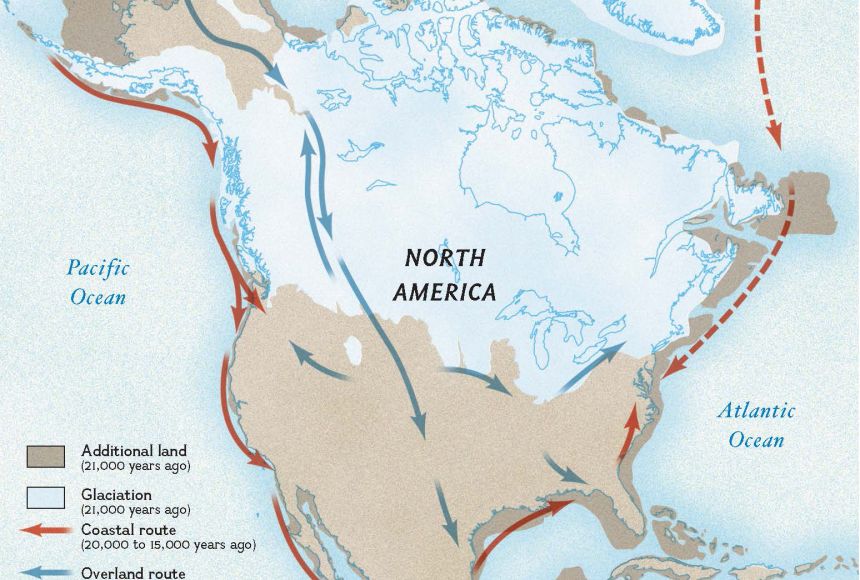
History is kinetic and ancient history very much so. What we know keeps changing with each new discovery. Those findings often begin as speculation that generates increased attention and finally gathers sufficient gravitas to overcome the entrenched opposition from the guardians of the norm. Keeping an open mind to the possibilities is an excellent perspective for glimpsing the big view.
The pathways to and through the Americas are a source of fascination because this land mass apparently was the last in the world to be occupied by humans. It was once believed to have occurred 12,500 years ago. We now know that the first peoples to arrive here appeared at least 30,000 years ago and perhaps much earlier. If so, it may have happened while Neanderthals and other hominins still walked the earth.
Who these people were, where they came from, when they arrived, and how so many different groups came to settle this land is a puzzle being slowly revealed. Whether or not in super-archaic times they originated from a similar place, we know they came here in waves of migration at different times from different places traveling different paths and speaking distinctly different languages. There is a lot more to be learned.
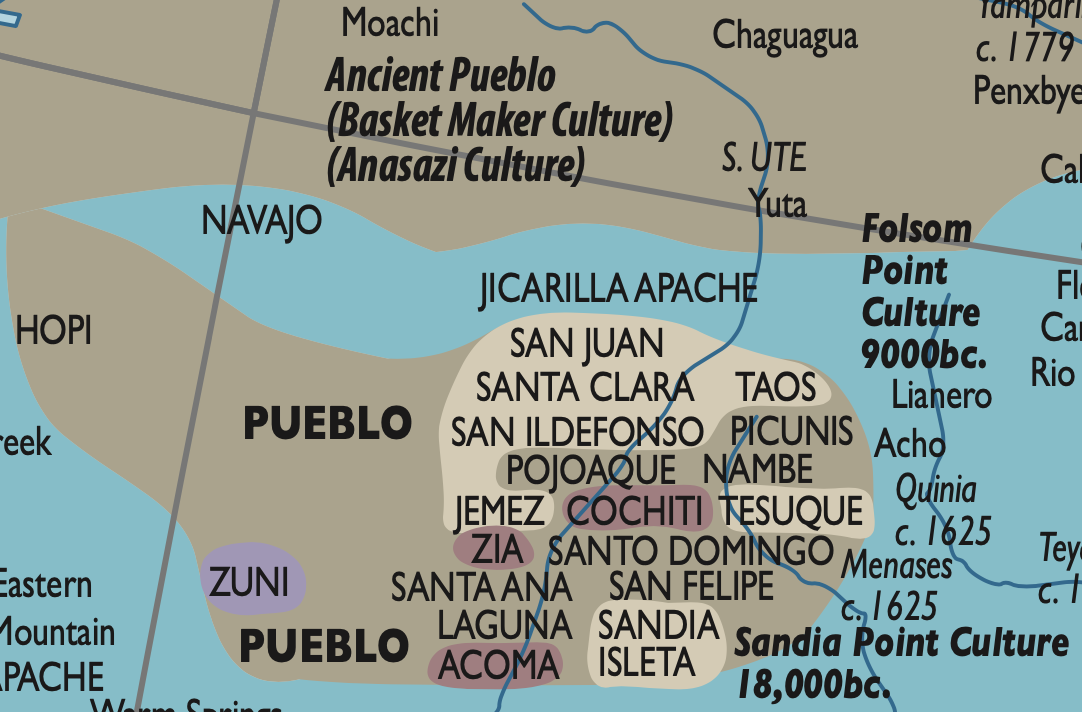
Five different language phyla, many different dialects, and indications of several prehistoric cultures in just this little piece of the American Southwest. It’s typical of what existed throughout this land before European contact. The stunning diversity of Native North America is far greater than anything we formally were taught in school, another unfortunate byproduct of the stereotype we made of Indigenous people as we sought to destroy their way of life. What there is to know is hidden but not lost.
Not only has scholarly interest greatly increased over time, native nations themselves are reclaiming their agency and reinvigorating their culture. The first step has been a concerted effort to recapture and record their language before it is forgotten. Efforts in the nineteenth and twentieth centuries to extinguish those native languages was a fundamental part of U.S strategy to destroy the culture of now captive peoples. It was effective but thankfully it ultimately failed. Some were lost but many more saved.
The renewed interest in their own culture, and the sense of the value those many cultures have not only to them but to all of us, is a recognition that their history is American history and all of us are heir to it, be we Indigenous or not. Place names of Indian origin are found in every corner of this country. But their cultural influence is so much deeper and what they have to offer so much greater. We would be the wiser to encourage the reinstitution of their self-determination and to explore and learn with them in depth from all of that legacy.
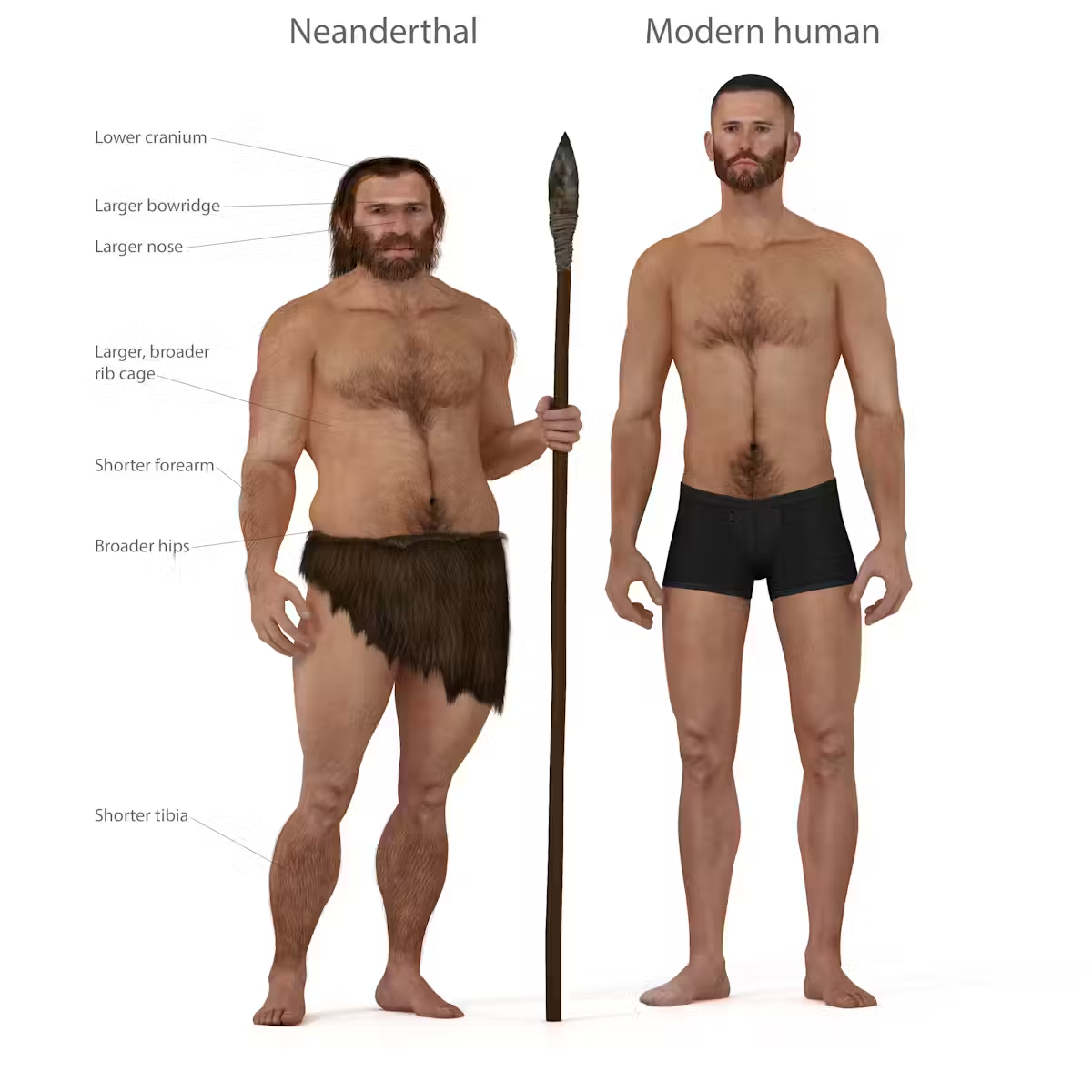
Speaking of ancient history and of stereotyping, do you remember what we learned about cavemen back in the days when our language defaulted to the male pronoun and we were eager learners? I remember how fascinating I found the Natural History Museum as a child, that cavernous place of huge dinosaur skeletons and carefully constructed dioramas in large glass cases.
My favorite was the small group of cavemen, male and female both, cowering in their cave as a couple of the braver men with torches fended off the saber-toothed tiger at the entry. The men were swarthy and clad in breechcloth only at the hips, the women even then were covered top and bottom in those olden days before Free the Nipple. That was the picture we were given.
We imagined them as primitive, guttural, perhaps sub-human beings and not as a formidable species of immediate cousins in the human family tree. We have learned that they had language, made and collected art, were skilled tool and weapon makers, cared for the sick and disabled among them, had burial rituals, and by interbreeding with homo sapiens, who came along much later, they bequeathed their DNA to modern humans. Moreover, they made their way successfully as a species for longer than homo sapiens have existed to date. Maybe now we can think of them as people.